
Explosion-Proof Flexible Conduits
Flexible conduits that protect and route wiring in classified areas — absorbing vibration, allowing equipment movement and keeping enclosures sealed.
Explosion-Proof Flexible Conduits — product range
Flexible conduit and hose for motor connections, vibrating equipment and panel-to-field wiring in Zone 1 / Zone 2 installations — compatible with Ex e / Ex d systems, IP66, −40 to +80 °C, sizes 1/2" to 4" in NPT, G and metric threads. Items marked “View product” open a full specification page.
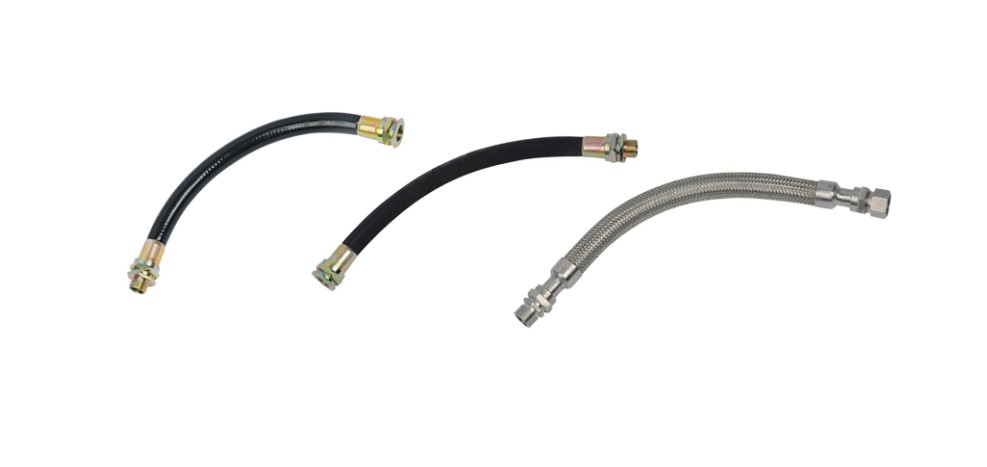 NGD series explosion-proof flexible conduitRubber / steel-wire braided / 304 stainless steel sheathView product ›
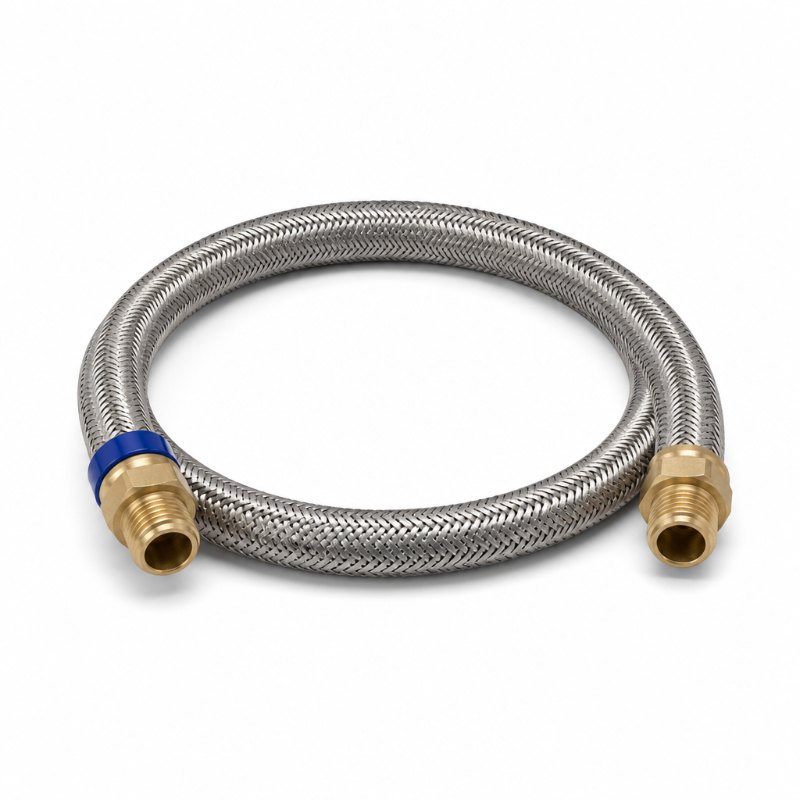 Flexible conduit, stainless-steel braidedStainless-steel braid jacket
 PVC-jacketed conduit, liquid-tight hose, threaded connectors and end fittings are also part of this series. Tell us the size, thread standard and jacket material you need and we will confirm the closest construction.
Request a quote
Send conduit size, thread standard, jacket material and required quantity for an indicative specification.
When flexible conduit is the right answer
Rigid conduit is cheaper and mechanically stronger, so it is the default for straight runs between fixed points. Flexible conduit takes over wherever the two ends of a run do not stay in the same relative position: motor terminal boxes on vibrating skids, equipment that has to be moved for maintenance, panel-to-field connections where the alignment is not exact, and any joint that has to absorb thermal movement. The flexible section is a designed part of the installation, not a way of finishing a run that was measured badly.
Choosing the construction
| Construction | What it gives you | Normally specified when |
|---|---|---|
| Rubber sheath | Flexibility and resistance to repeated movement | Short connections where the movement is continuous, such as at a vibrating motor |
| Steel-wire braided | Mechanical protection on top of the flexible core | Runs that are handled, walked past or exposed to abrasion on site |
| 304 stainless steel sheath | Corrosion resistance with high mechanical strength | Offshore, coastal and chemical plants, and any wash-down area |
PVC-jacketed conduit, liquid-tight hose and the threaded connectors and end fittings that terminate each end are part of the same series, so a run can be specified from the panel to the equipment rather than point by point.
Size, length and thread
The NGD series covers sizes from 1/2" to 4" with threads in NPT, G and metric, rated IP66 and −40 to +80 °C, compatible with both Ex e and Ex d systems. Two practical points decide most installations. First, keep the flexible length as short as the movement requires — long flexible runs sag, need support and are more easily damaged. Second, match the thread at both ends: the flexible conduit has to meet a certified connector at the panel and a certified fitting or gland at the equipment, in the same standard.
Flexible conduit in practice
Most flexible-conduit problems on a running plant are mechanical rather than electrical: a run installed with no slack that then fails at the first thermal cycle, a braid that has been abraded through on a steel edge, or a length so long that it sags into a walkway. Supporting the run, protecting it where it crosses structure, and leaving enough slack for movement costs very little at installation and avoids most of the call-outs afterwards. Where the conduit enters vibrating equipment, the entry itself is the point to watch, because that is where the movement is concentrated.
Frequently asked questions
How long can a flexible conduit run be?
As short as the movement requires, with enough slack to allow that movement without tension. Long unsupported runs are a mechanical problem waiting to happen, and they are normally replaced by rigid conduit with a short flexible section at the equipment.
Can flexible conduit be used as the only connection to a motor?
It is commonly used for the final connection to a motor terminal box, where vibration makes a rigid connection unsuitable. The entry is still made off with a certified fitting, and the conduit itself has to be suitable for the zone.
Which end fitting do I need?
Certified connectors matched to the conduit size and thread, at both ends. Tell us the conduit size, the thread standard and the enclosure entry and we will confirm the fittings with the conduit.
Is stainless steel always better?
It is stronger and more corrosion-resistant, and it costs more. For indoor, dry, fixed installations a rubber or braided construction is usually sufficient; the stainless sheath earns its place offshore, in coastal plants and in wash-down areas.
What are the temperature limits?
The series is rated −40 to +80 °C. If the equipment runs hotter than that, say so before the construction is chosen.
What to send us for a quote
- Conduit size and the required length
- Thread standard at each end
- Construction: rubber, steel-wire braided or 304 stainless steel sheath
- Zone, and whether the run connects to Ex e or Ex d equipment
- Quantity of connectors and end fittings required
Request a quote with the size, thread standard and jacket material and we will confirm the closest construction.
Watch the production line in our factory videos — braided steel construction, outer jacket and fitting assembly.
Explosion-Proof Flexible Conduits: Frequently Asked Questions
Where flexible conduit is the right choice, and which construction suits your environment.
When should I use flexible conduit instead of rigid conduit?
Use flexible conduit wherever relative movement exists between the two ends of a run: motor and pump connections, vibrating machinery, skids that are periodically re-positioned, thermal expansion in long pipe runs, and field wiring on mobile or portable equipment. Rigid conduit is still the right choice for long straight runs and where mechanical protection against impact is the main requirement.
Which constructions are available?
Three main types. Galvanized steel core with a PVC jacket, the general-purpose workhorse for outdoor and washdown areas. Stainless steel core with a thermoplastic polyurethane jacket for chemical plants, offshore and food processing, where the jacket must resist oils, coolants and hydraulic fluid. And explosion-proof flexible conduit supplied with matched Ex certified fittings at each end, which is the version to specify inside a hazardous area.
What temperature range and IP rating can I expect?
A PVC-jacketed conduit is typically good from about −20 °C to +80 °C, while polyurethane and stainless steel versions extend to roughly −40 °C to +105 °C, so check the ambient at the installation point rather than the plant average. With correctly tightened Ex fittings the assembly is rated IP66, and IP67 versions are available where jet spray or temporary immersion is possible.
Does flexible conduit maintain the Ex rating of the equipment?
Yes, as long as both ends are terminated with certified fittings whose thread and protection concept match the enclosure, and the run is supported so the conduit cannot pull on the entries. Flexible conduit itself is not a protection concept, so the Ex integrity comes from the fitting and the enclosure it seals into.
Question not answered here? Send it to our engineering team — we answer hazardous-area selection questions with the relevant standard referenced.
Related: NGD series flexible conduit, cable glands and conduit fittings, explosion-proof fans.